
Imagine stepping into a warm shower on a cold morning, only to have the water turn icy because the tank ran out. If you have a large family or multiple bathrooms, you know this struggle all too well. A condensing tankless gas water heater solves this by heating water on demand, providing endless hot water while saving energy and space. In this guide, we review the top condensing models from Rinnai and Rheem to help you find the perfect fit for your home. Whether you need a compact unit for a small house or a high-output model for simultaneous showers, we have you covered.
Condensing tankless heaters are more efficient than traditional non-condensing units because they capture extra heat from exhaust gases. This means lower utility bills and a smaller carbon footprint. Our picks are based on performance, efficiency, and real-world reliability. For a broader look at gas tankless options, check out our best gas tankless water heater for home guide.


Buying Guide
Flow Rate (GPM)
The flow rate, measured in gallons per minute (GPM), tells you how much hot water the heater can deliver at a given temperature rise. For a typical home with two to three bathrooms, you will need at least 8 GPM to run multiple showers simultaneously. Larger homes with four or more bathrooms may require 10 GPM or more. Consider your peak usage: if you often run the dishwasher and shower at the same time, a higher GPM unit is worth the investment.
For example, the Rinnai RX199iN Condensing Smart Sense Tankless offers up to 11.1 GPM, making it ideal for large households. On the other hand, a smaller unit like the Rheem RTG Series 7.0 GPM Liquid Propane Tankless is perfect for smaller homes or apartments. To determine your exact needs, check our best whole house tankless water heater guide.
Energy Efficiency (UEF)
The Uniform Energy Factor (UEF) measures how efficiently a water heater converts fuel into hot water. Condensing models typically have UEF ratings of 0.95 or higher, compared to non-condensing units around 0.82. A higher UEF means lower operating costs and less energy waste. For maximum savings, look for a unit with a UEF of 0.98, like the Rinnai RX series. These models use a secondary heat exchanger to capture exhaust heat, making them the most efficient option on the market.
When comparing brands, Rinnai and Rheem both offer condensing models with excellent efficiency. However, Rinnai’s Smart Sense technology automatically adjusts gas and water flow for optimal performance. If you want to reduce your carbon footprint, a condensing unit is the way to go. For more on brand reliability, see our best gas tankless water heater brands article.
Indoor vs. Outdoor Installation
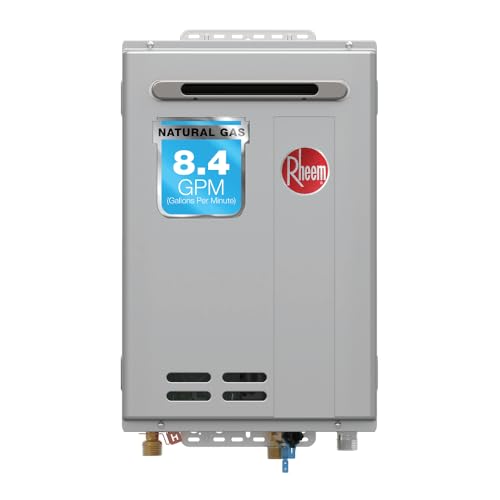
Decide where you want to install the unit. Outdoor models, like the Rheem RTG Series 8.4 GPM Natural Gas Tankless, save indoor space and eliminate venting costs. They are weatherproof and can be mounted on an exterior wall. Indoor models require proper venting and may need a condensate drain, but they are protected from harsh weather and can be installed in a basement or utility closet. Some units, like the Rinnai RX series, offer versatile venting that allows both indoor and outdoor installation, giving you flexibility.
If you live in a cold climate, an outdoor unit with freeze protection is essential. Rinnai’s Versa Vent system simplifies installation, but you will need an optional vent cap for outdoor use. Always hire a professional for installation to ensure safety and warranty compliance. For more on outdoor options, check our best outdoor tankless water heater guide.
Final Thoughts
Choosing the right condensing tankless gas water heater depends on your household’s hot water demand, installation space, and efficiency goals. For most large families, the Rinnai RX199iN Condensing Smart Sense Tankless offers an unbeatable combination of high flow rate and smart features. If you prefer a budget-friendly outdoor option with solid performance, the Rheem RTG Series 8.4 GPM Natural Gas Tankless is a reliable choice. Both provide endless hot water and significant energy savings, so you can enjoy a comfortable home and lower utility bills.
Frequently Asked Questions
What is the difference between condensing and non-condensing tankless water heaters?
Condensing models capture heat from exhaust gases that would otherwise be wasted, achieving higher efficiency (UEF 0.95+). Non-condensing units release these gases directly, making them less efficient (UEF ~0.82). Condensing units also require a condensate drain, but they save more energy over time.
Can a condensing tankless water heater be installed outdoors?
Yes, many condensing models, such as the Rinnai RX series, are designed for both indoor and outdoor installation. For outdoor use, you will need an approved vent cap (like the RX-OVC) to protect the unit from weather. Always check the manufacturer’s specifications and local codes.
How much maintenance does a condensing tankless water heater require?
Regular maintenance includes flushing the heat exchanger to remove mineral buildup, especially in hard water areas. Rinnai’s Quick Flush feature simplifies this process. Annual servicing by a professional is recommended to keep the unit running efficiently and to maintain the warranty.
Are condensing tankless water heaters worth the higher upfront cost?
While condensing units cost more initially, they offer higher energy efficiency, which can reduce your gas bills by up to 30% compared to non-condensing models. Over the lifespan of the unit (15+ years), the savings often outweigh the upfront investment, making them a smart long-term choice for eco-conscious homeowners.