
Imagine turning on the tap at your kitchen sink or bathroom vanity and waiting forever for hot water. That delay is not just annoying; it wastes water and energy. If you are tired of that lag, a point of use tankless water heater is the solution. This guide reviews the best point of use tankless water heater 110V options in 2026 to give you instant hot water exactly where you need it. We evaluated six top models based on heating power, safety features, and ease of installation, so you can make a confident choice.
Whether you need to upgrade a small sink, a garage workshop, or an RV, these compact units deliver on-demand hot water without occupying valuable space. For a broader look at 110-volt models, check out our best 110 volt electric tankless water heater guide.


Buying Guide: What to Look for in a 110V Point of Use Tankless Water Heater
Choosing the right point of use tankless water heater for your home involves more than just picking the first model you see. Here are the key factors we considered during our evaluation to help you find the perfect fit.
Heating Power and Flow Rate
The core of any tankless heater is its ability to raise water temperature quickly. For a 110V point of use unit, power typically ranges from 3000W to 3500W. This dictates the flow rate you can expect, usually between 0.3 and 0.66 gallons per minute (GPM). For a single sink or faucet, that is more than enough. Remember, the higher the wattage, the more temperature rise you can achieve at a given flow rate.
Pay attention to the inlet water temperature in your area. If you live in a colder region, you might need a higher wattage model to reach a comfortable hot water temperature. For a detailed comparison of various electric tankless options, refer to our best electric tankless hot water heater picks.
Installation Requirements and Electrical Needs
Installation complexity can vary widely. Some 110V models are designed to plug into a standard outlet, while others require hardwiring. Always check the electrical requirements before purchasing. For instance, a 3500W unit may need a dedicated 30-amp breaker and 10 AWG wire. If you are not comfortable with electrical work, consider a plug-in model or consult a professional.
Also, note that most of these units must be installed vertically to function correctly and avoid damage. The physical size and mounting options are important for tight spaces under sinks. Our guide on point of use water heaters provides more installation insights.
Safety and Durability Features
Safety should never be a compromise. Look for features like IPX4 water resistance, leakage protection, dry-boil protection, and automatic shutoff in case of overheating. The materials used in the heating element and water chamber also matter. Stainless steel or cast aluminum heating elements are more resistant to scale and corrosion, extending the unit’s lifespan. ETL certification is a good indicator of safety and quality.
For a deeper dive into the top manufacturers, explore our best electric tankless water heater brands article.
Temperature Control and Display
Precise temperature control is a luxury you will appreciate daily. Many modern units feature digital thermostatic controls that allow you to set the exact temperature in 1-degree increments. A clear LED display makes it easy to read the current temperature and adjust settings. Some models even allow you to switch between Fahrenheit and Celsius. This level of control ensures you get the perfect warm water for washing hands or cleaning dishes every time.
Final Thoughts
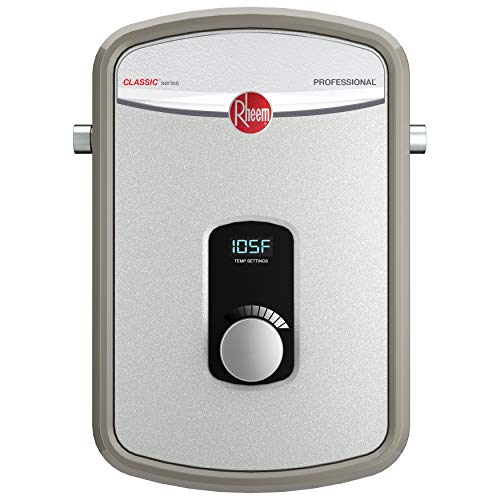
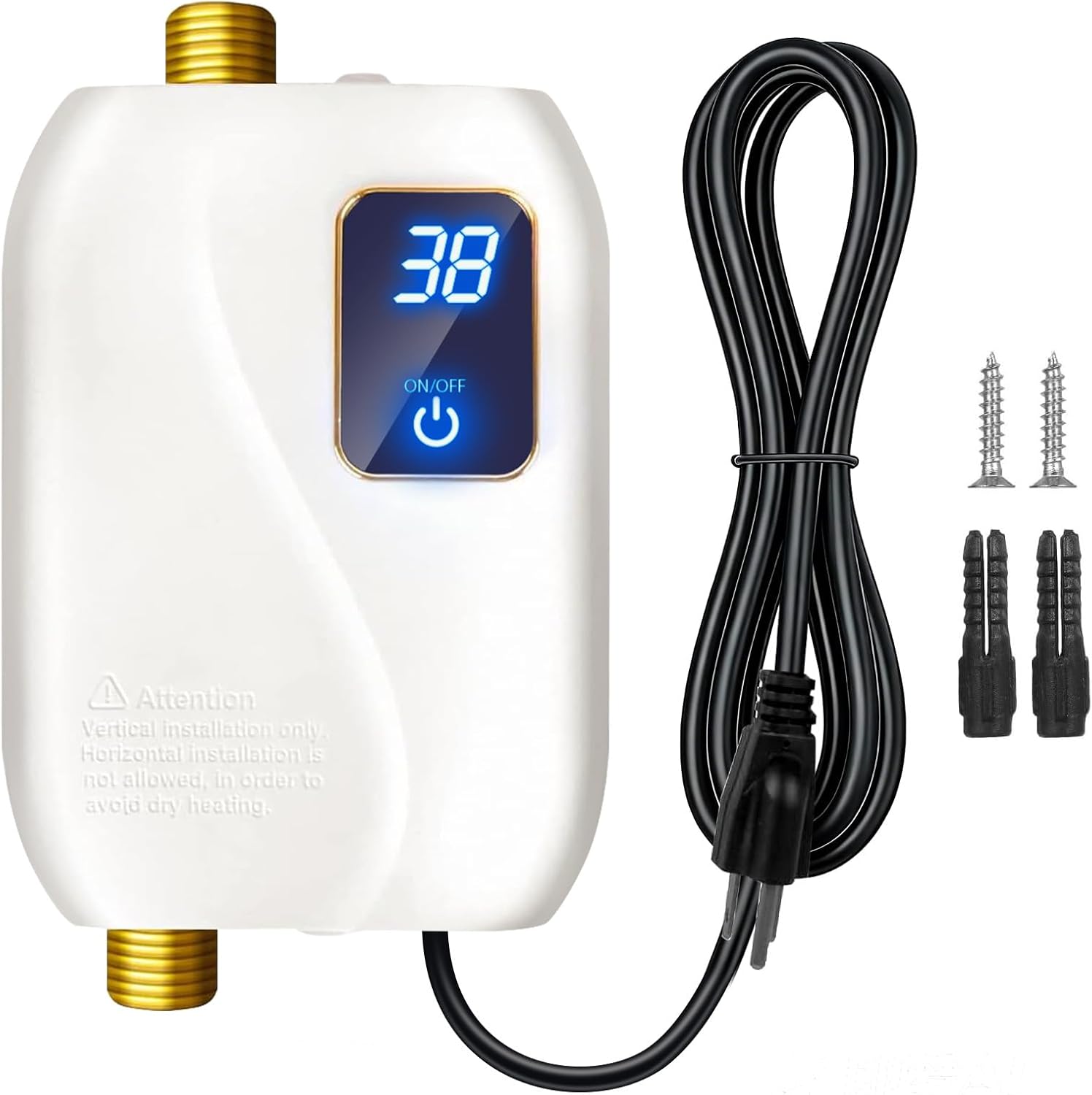
Choosing the right point of use tankless water heater comes down to your specific needs. For a reliable, high-performance option from a trusted brand, the Rheem 3.5kW Point-of-Use Thermostatic Tankless is our top pick, offering precise temperature control and a compact design. If you are looking for an affordable and feature-packed solution for a small sink, the Tankless Water Heater Electric 3000W is an excellent choice with its digital display and safety features. Both will give you endless hot water on demand, saving you time and energy.
Frequently Asked Questions
Can a 110V tankless water heater be used for a shower?
Generally, no. Most 110V point of use tankless heaters provide a flow rate of 0.5 to 0.66 GPM, which is insufficient for a typical shower that requires at least 1.8 GPM. They are best suited for single sinks, such as in bathrooms, kitchens, or laundry rooms. For shower applications, you would need a higher voltage (240V) unit.
Do I need a plumber to install a 110V tankless water heater?
It depends on the model. Some units are designed for DIY installation with standard 1/2-inch NPT connections and a plug-in cord. However, many 110V models require hardwiring to a dedicated circuit, which should be done by a licensed electrician. Always check the manufacturer’s instructions and local building codes.
How much hot water does a 110V tankless water heater produce?
The output depends on the unit’s wattage and the incoming water temperature. A 3000W unit can raise the water temperature by about 82°F at a flow rate of 0.3 GPM, or by 131°F at 0.5 GPM. This is perfect for washing hands, rinsing dishes, or any task that requires a modest amount of hot water on demand.
Are 110V tankless water heaters energy efficient?
Yes, they are highly efficient because they only heat water when you need it, eliminating standby heat loss that occurs with traditional tank heaters. Most models have a thermal efficiency of around 98%, meaning nearly all the electricity is converted into heat. This can lead to significant energy savings over time. For RV applications, these units are particularly efficient; see our best electric tankless water heater for RV guide.